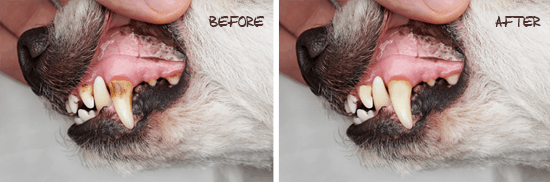
Your pet's dental hygiene is much more than just a question of aesthetics and white teeth. By offering your pet the right preventive care, you'll be able to keep them longer and give them a better quality of life.
Tartar... the enemy to conquer
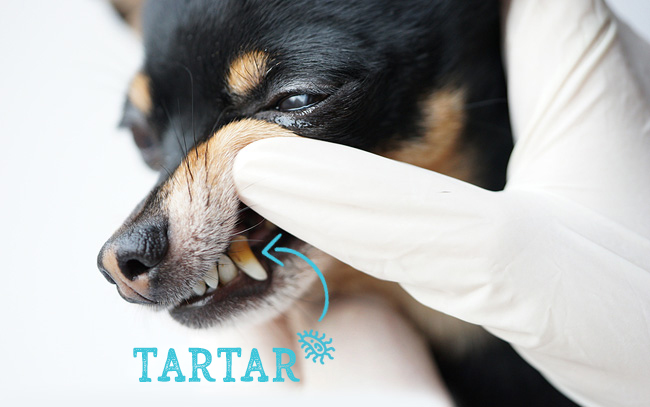
Plaque is first deposited on teeth and calcified by saliva to become tartar. Once present, tartar, made up of millions of bacteria, represents a real threat to your companion.
More serious problems
Bacteria in the mouth are responsible for bad breath. The tartar that accumulates on your cat or dog's teeth will infiltrate under the gums, causing infection and inflammation - gingivitis. If not treated in time, dental abscesses or parondontitis can occur. Dental abscesses, not always visible without an X-ray, can be a major source of pain and behavioural changes for your pet. Parondontitis will eventually cause instability of the affected tooth, which may ultimately fall out.
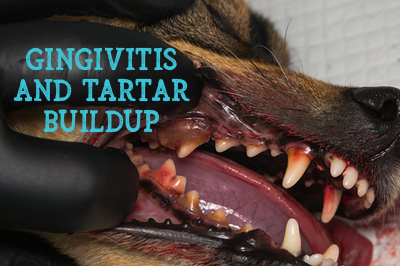 In addition to direct damage, some bacteria found in tartar are likely to enter the bloodstream and contaminate other organs. The heart, liver and kidneys are particularly at risk.
With large quantities of bacteria in the animal's mouth, there's also a high risk that some will be inhaled and end up in the respiratory tract, causing potentially serious lung infections.
Of course, the dangers of poor dental health and the risk of death do not appear overnight, but are a problem that evolves over the years.